

Dogs may look like they’re simply “resting” when left home alone, but for many, long stretches of inactivity can quietly lead to stress, frustration, and boredom. In homes across Yorktown, Poquoson, Newport News, and Hampton, busy schedules are a normal part of life, but understanding how time alone affects dogs can help prevent unwanted behaviors and support their overall well-being. Today, I’m breaking down the hidden stress dogs experience when left alone too long.
Why Time Alone Can Be Stressful
For All Dogs, Regardless of Age or Condition
Dogs are social animals. They thrive on interaction, routine, and engagement with their environment and those around them. When left alone for extended periods without stimulation or company, many dogs don’t just relax or accept boredom as the status quo; they look for ways to cope. For some, coping shows up in subtle ways. For others, it becomes more obvious and, often, more problematic.
 For Puppies
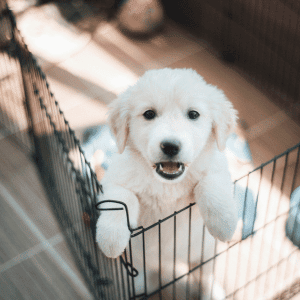
Puppies are especially vulnerable to long periods alone. At this stage, they are learning everything, from appropriate chewing habits to how to feel safe and confident in their environment. When left alone too long, puppies may become overwhelmed, anxious, or bored, leading to destructive chewing and potty accidents, which can become habits that are difficult to undo later. Regular breaks, interaction, and structured activity are essential for helping puppies grow into well-adjusted adult dogs.
For Senior Dogs & Dogs with Physical and Cognitive Changes
Senior dogs, particularly those experiencing early or advanced cognitive decline, loss of sight, or difficulty hearing, can also struggle with being left alone. Changes in memory and awareness may lead to confusion, restlessness, or anxiety when their environment feels unpredictable or unfamiliar. Some may pace, vocalize, or have accidents in the home. Consistent check-ins and maintaining familiar routines can provide reassurance and help reduce stress for aging dogs who need a little extra support.
 Common Behaviors Linked to Boredom and Stress
When dogs don’t have appropriate outlets for their energy, mental stimulation, or social interaction, they often create their own “activities.” These behaviors aren’t acts of defiance; they’re signals that something is missing. They are ways of self-soothing, creating excitement, ensuring comfort, or simply letting out anxiety; unfortunately, they tend to be undesired behaviors that cause disharmony in the home.
Some of the most common soothing behaviors include the following, but dogs are inventive, so don’t rule out other behaviors only because they didn’t make this list.
Counter-surfing
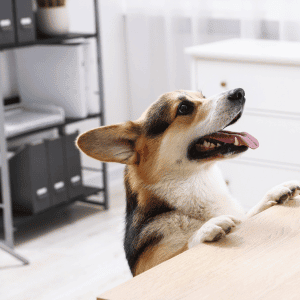
Bored, anxious, or under-stimulated dogs may explore countertops or tables in search of food or, well, any stimulation they can find. What starts as curiosity can quickly turn into a habit if it is consistently rewarded. Those bananas they grabbed off the counter were a reward. The bag of hotdog buns that they snuck from the kitchen cart and tore into was a reward. Every time your dog accomplishes a heist from the kitchen, garbage can, or other room in the house, it teaches them that counter-surfing isn’t just a fun way to entertain themselves; it’s often delicious too!
 Inappropriate Chewing or Elimination
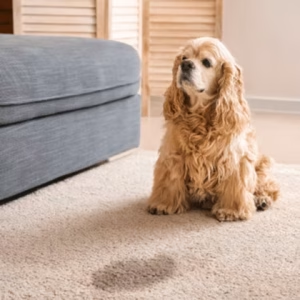
Shoes, furniture, pillows, and even walls can become targets when a dog is bored, anxious, or seeking sensory stimulation. Chewing is a natural behavior for dogs, but without proper outlets (and when left alone for long periods of time without supervision), dogs will chew what’s available. We have seen under-exercised dogs tear into bedding, kids’ toys, designer clothing, laundry, and home decor when looking for outlets on a lonely day.
The same applies to dogs that eliminate inappropriately during long days. You have to ask yourself, did they have any other choice? Could they not physically hold their bladders or bowels until you got home? In most cases, potty-trained dogs won’t go indoors unless they lose control of their bodies, which may be from holding it too long on long workdays.
Overgrooming or Licking
Excessive licking of paws or body areas can be a sign of stress or anxiety. Over time, this can lead to irritation or even injury. Hot spots can, of course, be caused by a bug bite, the rubbing of a harness, or allergies, but if you’ve ruled out all reasons for your dog’s hotspot, get a camera and set it up near where he or she rests during the day.
Try to see if there is a pattern to the licking. If it starts and stops throughout the day, it may not be an injury. If it starts right when you leave or after a long day, it may indicate some separation anxiety that hits as soon as you leave and continues until you return, or just starts when your dog’s alone time threshold has been met. For hotspots and over-grooming, a vet appointment is always a great start. Having an understanding of when the licking happens may help the vet better understand the solution, which is why the camera is helpful.
 Restlessness or Pacing
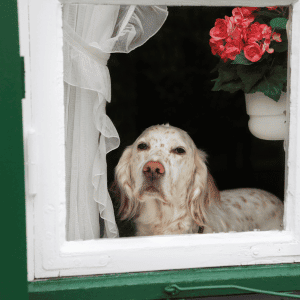
Some dogs struggle to settle and may spend long periods moving around the home instead of resting. Again, a camera will help you figure out how your dog spends his or her day in your absence. Not all pacing will start when you leave and continue until your return. Something could set off the pacing, like a knock at the door, a delivery truck, or an unfamiliar sound in the home.
If you notice your dog pacing for an extended period of time at any time during the day, it’s something to look into. They may be feeling ants in their pants (so to speak) because they need to eliminate (pee or poo) or just want to use their bodies and minds in a biologically appropriate way.
Excessive Barking
Boredom and frustration can lead to vocalizing, especially if dogs are reacting to outside sounds or activity. Again, it’s normal for a dog to react to a knock at the door, the sound of a delivery truck, or something they feel the need to investigate. That said, most dogs will settle back down once they have identified the threat (or lack thereof). If your dog barks incessantly during the day or for long periods after a perceived threat, it may be time to work with a trainer, especially if you live in a condo or townhome.
One of our dog walkers, Taylor, obtained a dog training certification and is exceptional with dogs. She would be a great resource for troubleshooting barking and any of the above concerns.
 It’s Not “Bad Behavior”, It’s Unmet Needs
It’s important to remember that unwanted behaviors are not about disobedience. We wrote a blog about this very topic last year, and we think it’s always a good reminder to embrace the fact that behavior is communication. Dogs want to please us. When they act out, it’s often the result of unmet physical and mental needs.
Dogs need:
- Regular movement and exercise
- Mental and sensory enrichment
- Predictable routines
Without these, even the most well-trained dog can develop habits that are difficult to break. When a dog’s social, physical, and mental needs are not met, they often don’t feel safe and secure, leading them to find comfort in ways that are normal for them but very inconvenient for us (and potentially, our neighbors).
The Hidden Stress Dogs Experience When Left Alone Too Long
Now that we understand the hidden stress dogs experience when left alone too long, it’s easier to find a solution. One of the most effective ways to reduce stress-related behaviors is to break up long periods of alone time by either planning your work-from-home days accordingly or hiring a dog walking company like ours.
Midday dog walks can:
- Provide an outlet for energy
- Offer mental stimulation through sniffing and exploration
- Reinforce routine and structure
- Help dogs settle more easily afterward
- Reduce damage from unwanted behaviors
- Allow for crate training because time spent in the crate will be shorter, thanks to the break in the day.
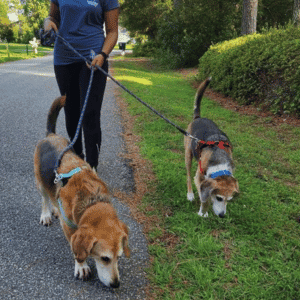
In areas like Hampton Roads, where many pet parents juggle work, commuting, and family responsibilities, even a single midday visit once or twice a week can make a meaningful difference. Think about your longest workday, the day you want to go to happy hour after work, the day of your favorite group fitness class at the gym.
On days when your schedule keeps you away from home, a midday dog walk can mean the difference between a content dog and one that is on the verge of burning the house down. Thank goodness dogs don’t have thumbs, am I right?!
 Supporting a Calmer, Happier Dog
When dogs have their needs met, the difference is noticeable. They’re more relaxed, less likely to engage in unwanted behaviors, and better able to rest comfortably when home alone. At Hearts at Home Pet Sitting, we focus on providing consistent care throughout Yorktown, Poquoson, Newport News, and Hampton. When a dog’s day includes movement, engagement, and routine, they don’t have to find their own ways to cope, leading to a more peaceful home for everyone.
The Best Dog Walkers in Hampton Roads
Hearts at Home Pet Sitting has been the most trusted dog walking and pet sitting company in Yorktown, Poquoson, Newport News, and Hampton, VA, since 2012. Our dog walking and cat sitting services are tailored to each family and pet’s needs, ensuring your peace of mind and their safety every day and every visit.
To get started with pet care, please complete a new client questionnaire here. Existing clients may request services here.
Please visit our website or contact us by email at Hello@HeartsAtHomePetSitting.com or by phone at 757-745-9868 to learn more.
Those outside our service area are encouraged to find a pet sitter near you at the Pet Sitters International or National Association of Professional Pet Sitters websites.


0 Comments